The Rubik's Cube has fascinated people worldwide since its invention in 1974 by Ernő Rubik. This colorful, twisting puzzle is often seen as a symbol of intelligence, problem-solving ability, and perseverance. But just how many people can solve a Rubik's Cube? This blog will explore global statistics related to the ability to solve the cube, giving you a full picture of just how many people have mastered this iconic puzzle.
What Percentage of People Can Solve a Rubik's Cube
While it is difficult to pinpoint an exact number of people who can solve a Rubik's Cube, estimates suggest that millions of people worldwide have learned how to solve it at least once in their lives. The total number of solvers is growing rapidly, thanks to the rise of online tutorials, competitions, and the popularity of speedcubing.
Estimate the Total Number of Person Solving Rubik's Cube
The world population is currently over 8 billion people. While not everyone has encountered a Rubik's Cube, surveys and estimates suggest that approximately 5-10% of the population has solved one at least once. This would mean that somewhere between 400 million and 800 million people have successfully solved a cube.
However, the number of people who can solve the cube quickly and consistently is much lower. Competitive speedcubers, for example, make up only a tiny fraction of solvers, but their influence on the community is significant.
Who Can Solve a Rubik's Cube?
How many people in the world can solve a Rubik's Cube? Solving a Rubik's Cube is no longer just for mathematicians and puzzle fans. With YouTube tutorials, online courses, and easy guides, more people are learning how to solve it. Schools, local clubs, and even online communities are helping beginners improve their skills. Let's break down who these solvers are.
Age Groups
- Children & Teenagers: Many young people are introduced to the Rubik's Cube in school, through friends, or online. Kids as young as 5 or 6 can learn beginner methods, and teenage solvers make up a large percentage of the speedcubing community.
- Adults: While many adults believe solving a cube is too difficult, thousands of people in their 30s, 40s, and beyond have learned to solve it as a hobby or mental exercise.
- Elderly Solvers: Some older adults take on the challenge of solving a cube as a way to maintain cognitive function and stay mentally active.
Learning Methods
- Self-Taught (Beginner Methods): A large percentage of solvers use the layer-by-layer method, which is one of the easiest ways to learn.
- Speedcubing Methods: The CFOP (Fridrich Method), Roux, and ZZ methods are popular among speedcubers who aim to solve the cube in under 10 seconds.
- Memory-Based Solvers: Some people memorize a sequence of moves rather than fully understanding the cube's mechanics, allowing them to solve it through repetition.
The Rise of Speedcubing and Competitive Solvers
Solving the Rubik's Cube as fast as possible has become an international sport. Speedcubing competitions, organized by the World Cube Association (WCA), attract thousands of participants worldwide.
Speedcubing Community Statistics
- Registered Competitors: As of recent data, there are over 150,000 officially registered speedcubers who participate in WCA events.
- World Record Holders: The fastest cubers can solve the standard 3x3 cube in under 4 seconds.
- Growing Popularity: With the rise of YouTube, TikTok, and online cubing communities, more people are becoming interested in speedcubing every year.
Why Are So Many People Learning to Solve the Cube?
These combined factors explain why the Rubik's Cube has become such a widespread and beloved activity. From schools to local cubing clubs, from influencers to classrooms, more people than ever are solving the Rubik's Cube, not only for fun but also for the cognitive and educational benefits it provides.
- Increased Accessibility: The Rubik's Cube has become much more accessible in recent years. Affordable cubes are available in local stores, online marketplaces, and even through community-based events, making it easy for anyone to pick up and start solving.
- Additionally, the vast number of online tutorials, apps, and videos has made learning simple and effective, allowing anyone to follow along at their own pace. Whether at home, in local libraries, or community centers, people can now access everything they need to solve the cube without having to go far.
- Cognitive Benefits: While solving the Rubik's Cube is fun, it also offers significant cognitive benefits. It's a great workout for the brain, helping to improve memory retention, sharpen problem-solving skills, and boost hand-eye coordination.
- These mental benefits are particularly valuable in educational settings, where students can apply these skills to other areas of study. Many people of all ages, from children to adults, use the cube as a way to exercise their brains, keeping their minds sharp and improving their ability to think critically and logically.
- Pop Culture Influence: Over the years, the Rubik's Cube has gained major visibility through movies, TV shows, and social media. Viral challenges, influencer posts, and even competitive speedcubing events broadcast on platforms like YouTube and Instagram have sparked interest in the cube.
- Young people, in particular, are excited to learn the cube after seeing it featured in pop culture or watching their peers solve it in fast times. Local communities are often buzzing with new cubers who share their tricks and achievements, further fueling the trend.
- Educational Use: Schools have also embraced the Rubik's Cube as a teaching tool. It's now commonly used in classrooms to enhance learning, particularly in STEM (Science, Technology, Engineering, and Mathematics) education. Teachers often use the cube to engage students with logic, geometry, and pattern recognition.
- It helps students understand spatial reasoning, enhances their ability to think critically, and promotes perseverance and patience. Many after-school clubs and community programs use the Rubik's Cube to foster problem-solving and teamwork skills in a fun and challenging way, bringing together learners from diverse backgrounds.
- Social and Community Connections: The Rubik's Cube has become more than just a puzzle; it's a way for people to connect. Local cubing clubs, online forums, and even social media groups bring people together to share tips, challenges, and experiences.
- Many communities hold cube-solving events, competitions, and workshops, creating spaces for both experienced cubers and beginners to connect and learn. The collaborative aspect of solving and competing with others adds an exciting social layer to the Rubik's Cube phenomenon.
- Motivation for Personal Achievement: For many, solving a Rubik's Cube is a personal challenge and a symbol of achievement. It's a puzzle that requires patience, persistence, and dedication, all of which make solving it a rewarding experience.
- Whether learning on their own or joining a local competition, many people feel a great sense of accomplishment after solving the cube, which drives them to continue improving their skills. Local competitions and online leaderboards also motivate people to push their limits and solve faster.
Bonus: Use an AI Cube Solver App
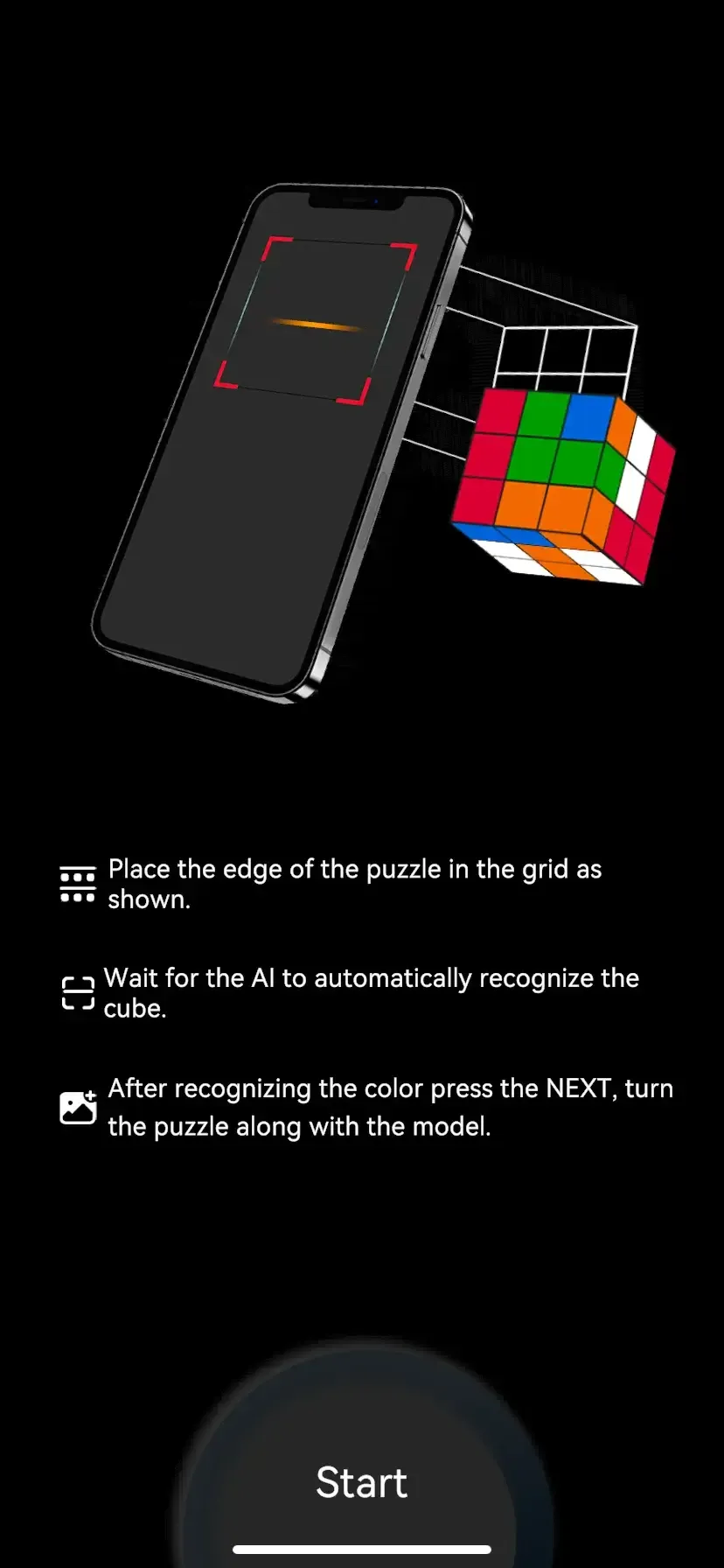
If you're looking for an elaborate Rubik's Cube solver, there's an AI Cube Solver app that can scan your cube, analyze its state, and provide step-by-step solutions. Whether you need help solving a scrambled cube or want to improve your solving skills, AI-based cube solvers can be a valuable tool for learning and mastering the puzzle efficiently.
Final Verdict
What percent of people can solve a Rubik's cube? While exact numbers are tough to pin down, plenty of people right here have picked up the skill, and the local cubing community is growing fast. Thanks to online tutorials and in-person meetups, more people are learning every day. Whether you're just starting or aiming to improve your speed, solving a Rubik's Cube is a fun and rewarding challenge for all ages.
How Many People Can Solve a Rubik's Cube FAQ
Q: What percent of people can solve a Rubik's Cube?
The exact percentage of people who can solve a Rubik's Cube is hard to determine, but estimates suggest that around 5-10% of the global population has solved one at least once. This number is growing due to online tutorials and the rising popularity of speedcubing.
Q: What percent of the population can solve a Rubik's Cube in under a minute?
Only a small fraction of the population—likely less than 1%—can solve a Rubik's Cube in under a minute. Speedcubing requires practice, pattern recognition, and efficient solving techniques. While millions of people have solved a cube at least once, mastering it to this level of speed is far less common.