What Is Rubik's Axis
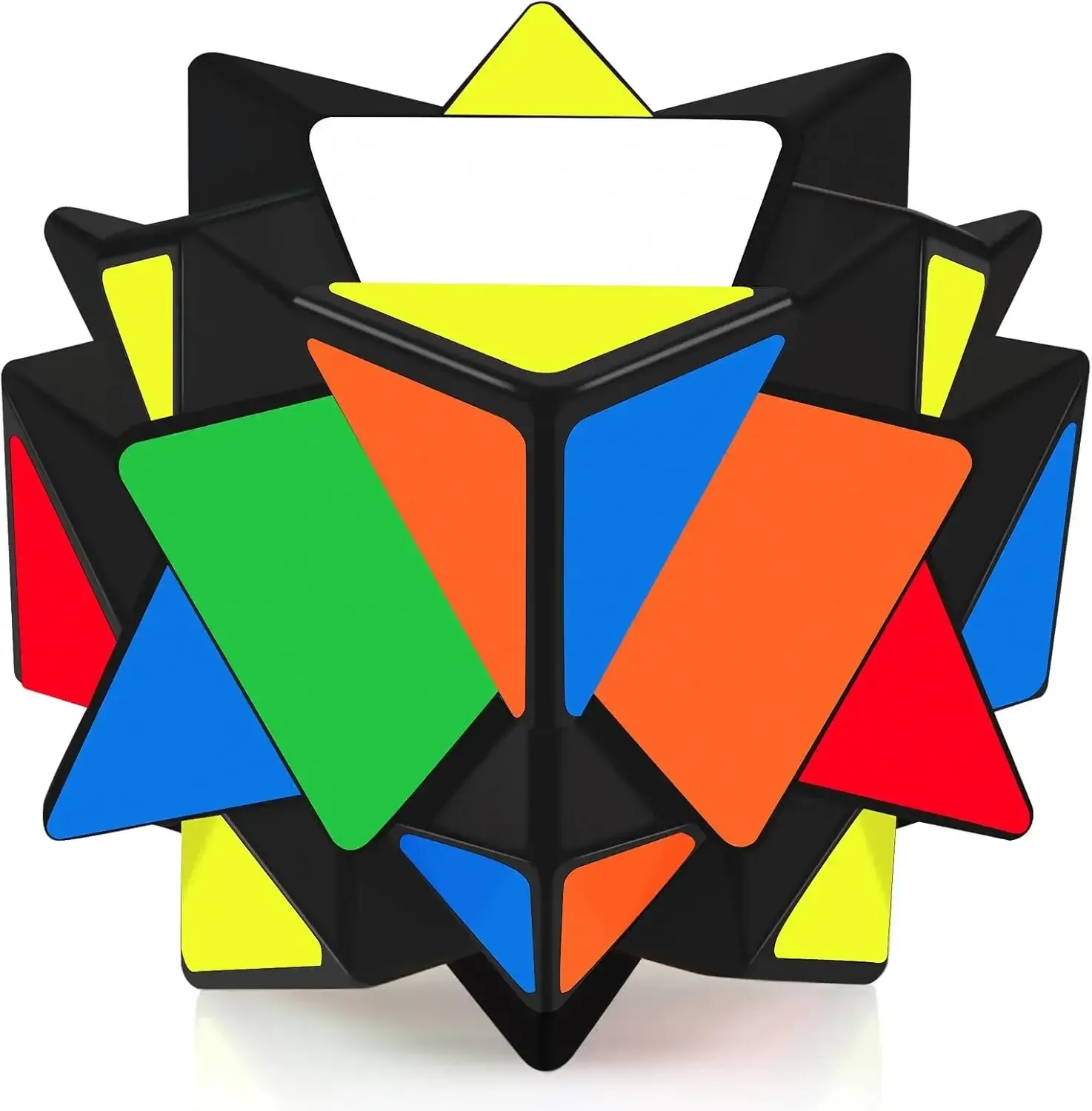
The Rubik Axis is a shape-mod of the standard Rubik's Cube, meaning it shares the same core structure but changes how it moves and appears. First designed by Katsuhiko Okamoto, this cube aligns its axis of rotation diagonally, which results in an asymmetrical and highly scrambled look after just a few turns.
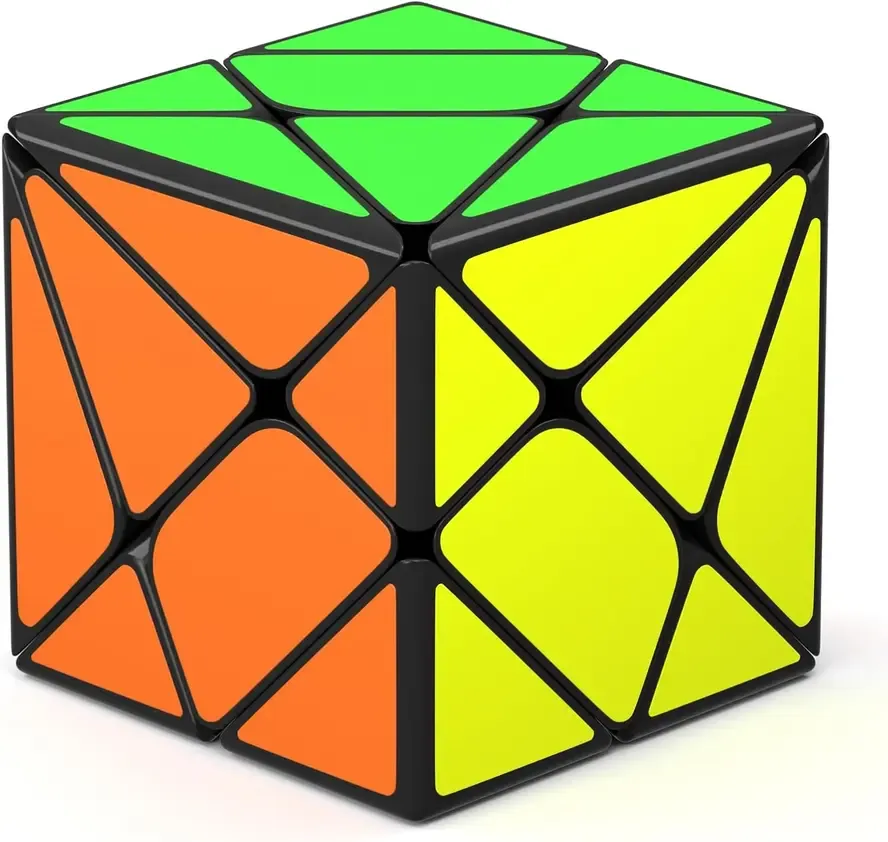
- Same fundamental structure as a 3x3, but with a rotated axis.
- Misalignment with every turn, making it look chaotic.
- Centers, edges, and corners appear identical, increasing the difficulty in recognition.
- Solving requires spatial awareness, as traditional color-based solving is ineffective.
Understanding Magic Axis Mechanics
Before jumping into solving methods, it's important to understand how the Axis Cube moves and why it appears so different from a standard 3x3.
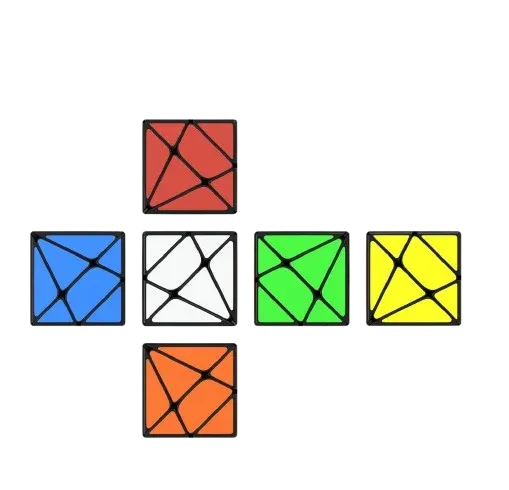
- Rotated Axis of Rotation: Unlike a normal 3x3 cube, the Axis Cube has its layers offset diagonally, which means that when turned, the shape warps dramatically.
- Misaligned Centers: Since the centers are rotated from their usual positions, recognizing them can be tricky.
- Identical Edges and Corners: The pieces look similar, which means that orientation mistakes are common.
While it may look overwhelming, the Axis Cube is not more complex in terms of algorithms—it's still just a 3x3 shape-mod. However, the challenge lies in spatial recognition and piece positioning.
How to Solve the Cubo Axis
Although the Axis Cube follows the same basic structure as a 3x3 cube, solving it requires a different approach due to its shape-shifting nature. Now, let's dive into the following step-by-step guide to solving the Axis Cube.
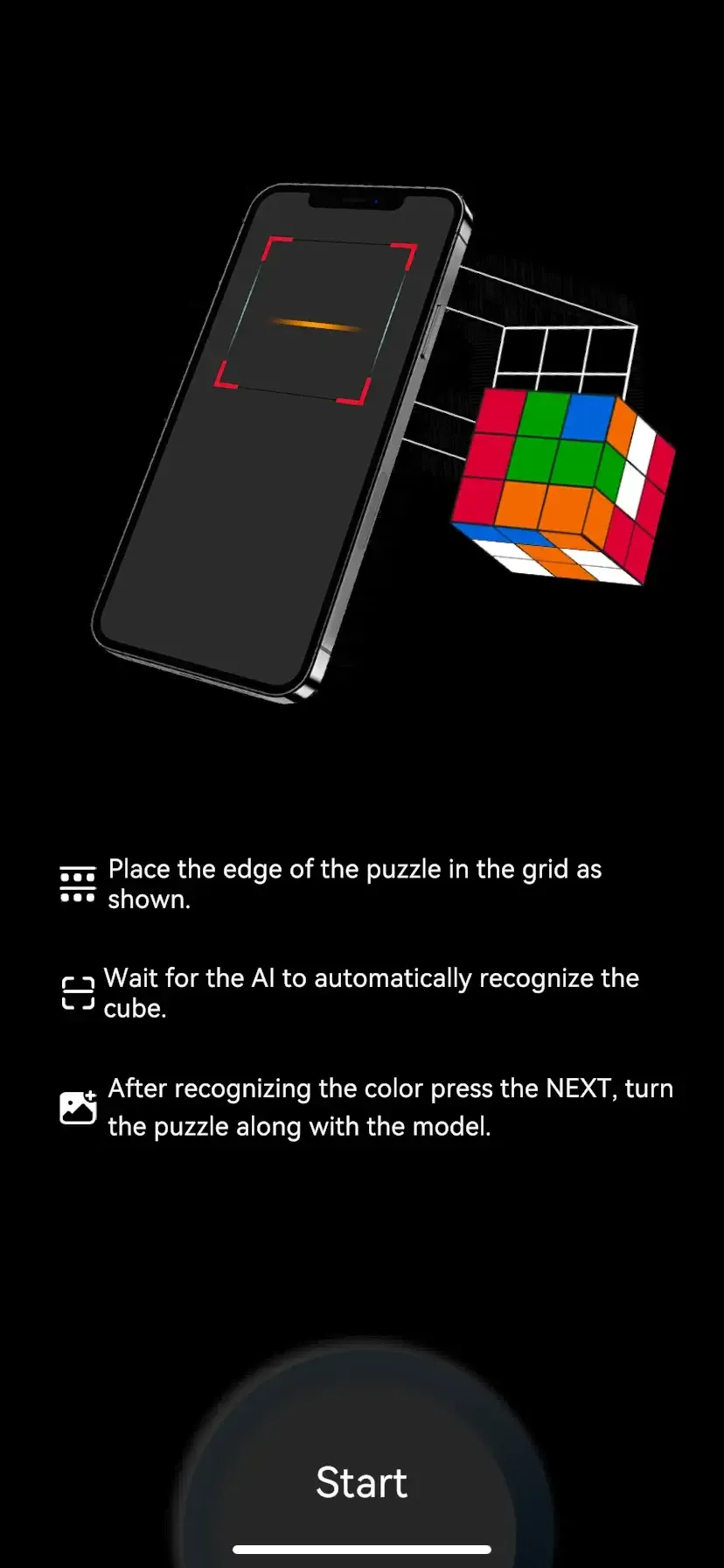
Bonus: There's a recommended AI Cube Solver app designed to assist with solving traditional Rubik's Cubes, which uses advanced algorithms to analyze your cube's current configuration by scanning the colors and offering step-by-step solutions.
Procedure 1. Solve the Centers
Before pairing edges and positioning corners, solve all six centers. Since the Axis Cube's centers look similar, misplacement can cause alignment issues. Focus on their position relative to other pieces rather than just color.
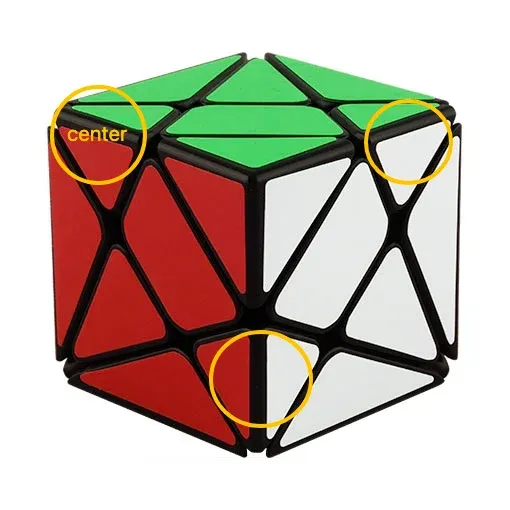
Step 1. Identify the true center piece based on how other pieces align around it.
Step 2. Adjust the remaining centers by matching their correct orientation with adjacent edge pieces.
Step 3. Once all centers are aligned, the cube may still look unsolved—but this is normal!
Procedure 2. Build the Cross
Once the centers are solved, the next move is to form a cross, similar to a 3x3 cube. Due to the Axis Cube's irregular shape, the cross may look uneven, but focus on aligning each edge with its center. A properly placed cross prevents confusion in later steps.
Step 1. Find an edge piece and place it in its correct position relative to the centers.
Step 2. Repeat the process for all four edge pieces, ensuring proper alignment with adjacent centers.
Step 3. Adjust any incorrectly positioned edges using F2L (First Two Layers) techniques if necessary.
Procedure 3. Solve the First Two Layers (F2L)
After forming the cross, the next step is solving the first two layers (F2L), where the cube's true challenge begins. Shape distortion makes it hard to recognize pairs, so rely on positioning rather than color. Careful alignment is crucial, as mistakes can cause major misalignment, requiring extra moves to fix.
Step 1. Locate a corner-edge pair and align them with the corresponding center piece.
Step 2. Use standard F2L algorithms to insert pairs into the correct slots.
Step 3. Repeat for all four corners and edges until the first two layers are completed.
Procedure 4. Solve the Last Layer (OLL & PLL)
With the first two layers done, the final step is solving the last layer, which includes orienting (OLL) and permuting (PLL) the pieces. Since colors aren't as distinct as in a standard cube, focus on shape and alignment. Mistakes can lead to parity errors, requiring extra moves to fix.
Step 1. Orient the last layer using OLL algorithms, ensuring that all pieces face the correct direction.
Step 2. Perform PLL algorithms to correctly permute the last layer pieces.
Step 3. If parity errors occur, use specialized parity algorithms to resolve them.
Common Challenges When Solving the 4x4 Axis Cube
The magic Axis's unconventional design introduces a range of challenges that require a different approach compared to standard cubes. As you work through the puzzle, it's important to recognize these specific issues and adjust your strategy to keep the solve on track.
Misidentifying Centers
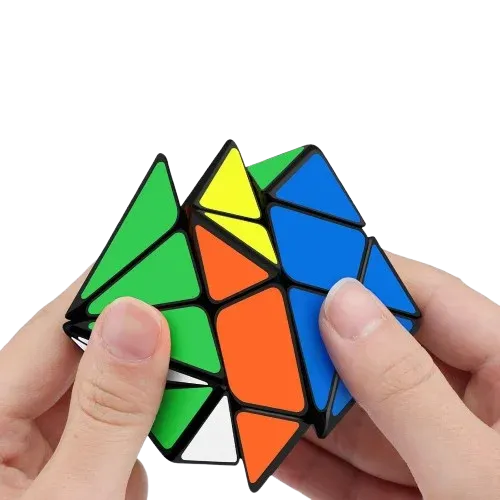
The Cubo Axise's centers look nearly identical, making it easy to place them incorrectly. Misaligned centers can cause major issues later in the solve, so always verify their positions by checking their alignment with surrounding pieces before moving forward.
Difficulty Recognizing Pairs
Unlike a standard cube, where colors help identify F2L pairs, the Axis Cube requires shape-based recognition. The irregular design makes it harder to spot correct edge-corner pairs, so focus on piece orientation and structural alignment rather than relying on color.
Last-Layer Parity Issues
Because of the cube's asymmetry, last-layer pieces may be swapped incorrectly, leading to parity errors. These mistakes often result from earlier misalignment. Learning and applying specialized parity algorithms will help resolve these issues efficiently.
Expert Tips for Solving the Axis Cube
Solving the Axis Cube requires more than just basic algorithms—it demands a deeper understanding of its unique structure and how the pieces interact. Here are some expert tips to help you master the puzzle and solve it more efficiently.
- Understand Piece Relationships
Since the Axis Cube doesn't rely on color for guidance, it's essential to focus on how the pieces relate to each other in terms of their positions and structure. Recognizing these patterns will help you place pieces correctly.
The cube's complex design can easily cause pieces to misalign, leading to lock-ups and difficulty turning. Make sure to execute each move with care to avoid unnecessary friction or misalignment.
- Practice Piece Recognition
One of the toughest parts of solving the Rubik Axis is recognizing where each piece belongs. With practice, you'll become better at identifying piece positions and knowing how to move them into place efficiently.
Final Verdict
The Axis Cube is more than just a simple shape-mod—it's a mental challenge that forces solvers to think beyond colors and recognize spatial structures. While it follows the same algorithmic steps as a 3x3 Rubik's Cube, its twisted axis and shape distortions make it uniquely difficult.
Axis Cube FAQ
Q: Is the axis cube difficult?
Yes, the Axis Cube is considered more difficult than a standard Rubik's Cube. Its irregular shape and lack of clear color patterns make it challenging to solve. Its shape-shifting design can also cause alignment issues, making the puzzle trickier to manipulate and solve.
Q: What is the axis of a cube?
The axis of a cube is an imaginary line through its center, around which the cube rotates. In an Axis Cube, this rotation causes the shape to shift while keeping the same basic solving mechanics.